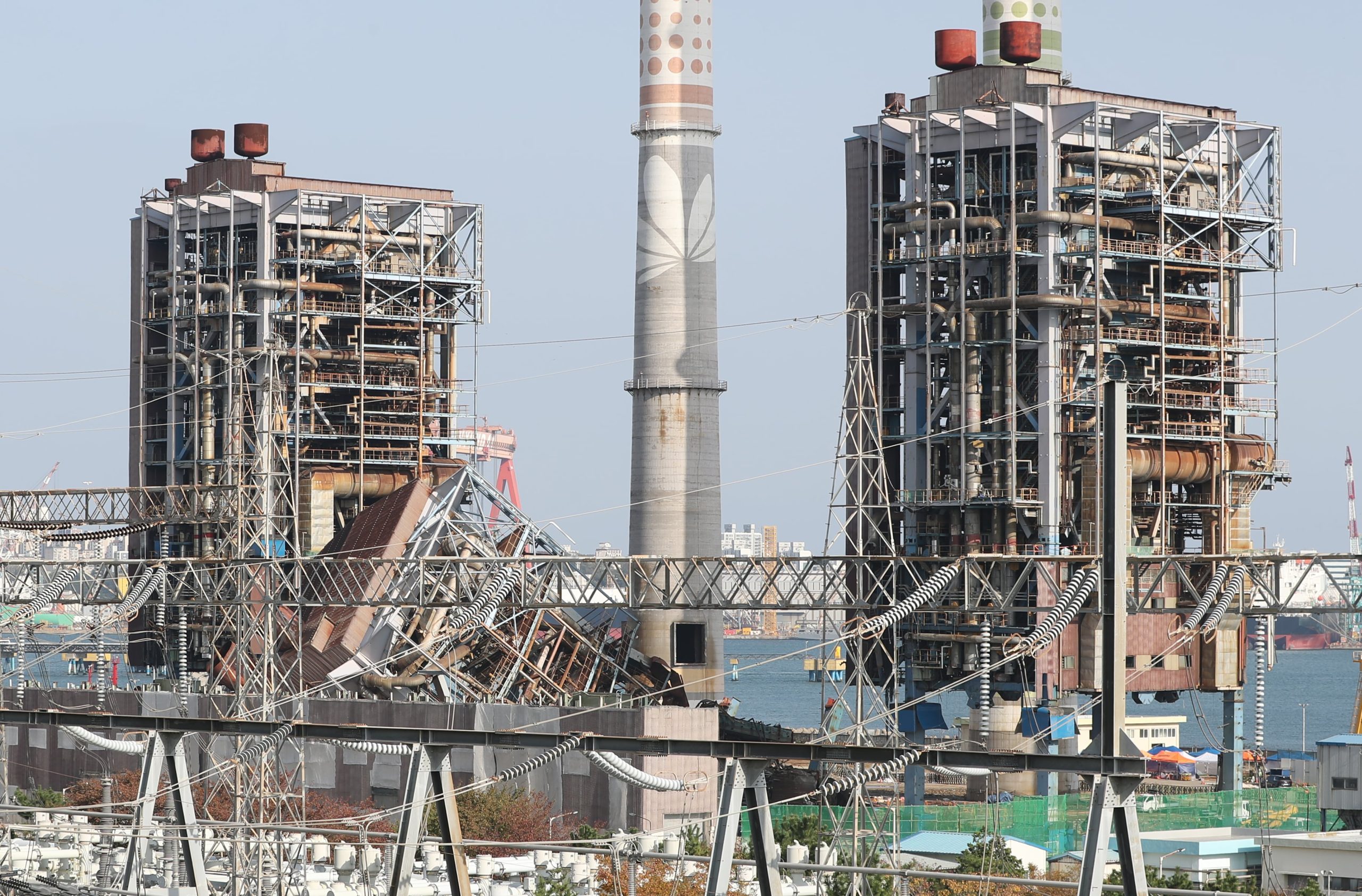
A Tragic Incident Sparks Concerns in Coal Plant Demolition Efforts
A tragic incident involving a human casualty occurred at the demolition site of the Ulsan Dongseo Power Plant on the 6th, raising concerns about the safety and management of ongoing coal plant decommissioning projects. This event has come amid growing pressure to shut down 28 coal-fired power plants by 2036, as part of broader efforts to reduce carbon emissions and transition toward cleaner energy sources.
The government’s plan to completely phase out coal-fired power generation by 2040 is expected to accelerate the pace of demolition work. According to the Ministry of Climate, Energy and Environment’s coal power phase-out strategy, which is based on the 10th and 11th Basic Plans for Electricity Supply and Demand, 28 of the current 61 operational coal-fired power plants will be closed by 2036. An additional 12 units are scheduled to be shut down by 2038. The process will begin with the closure of Taean Coal Power Plant Unit 1 next month, followed by Hadong Unit 1, Boryeong Unit 5, and Taean Unit 2 in the coming year.
Delayed Demolitions Due to Safety Issues
Many coal-fired power plants have already ceased operations but remain undemolished due to various challenges. For example, Korea South-East Power’s Samcheonpo Units 1 and 2 were permanently closed in 2021, but demolition has been delayed because of safety concerns related to the nearby operational Units 3 and 4. Similarly, Korea Midland Power’s Boryeong Units 1 and 2, which were closed in 2020, remain standing because adjacent Units 3–6 are still in operation. Korea Western Power also ended operations at the Pyeongtaek Thermal Power Plant in January of this year, but its demolition is yet to begin.
These delays highlight the complexity involved in decommissioning aging infrastructure. The process requires careful planning to ensure that neighboring operational units are not affected, and it often involves extensive risk assessments and safety protocols.
Early Closures Under Consideration
In addition to the planned closures, there are discussions about potentially closing some currently operational coal-fired plants earlier than their expected 30-year lifespan. Typically, coal plants are either converted to liquefied natural gas (LNG) power generation or shut down after 30 years of operation. However, the government’s push for decarbonization may lead to early closures.
Recent adjustments to the 2035 National Greenhouse Gas Reduction Target (NDC), set at 50–60% or 53–60% of 2018 emissions, could further speed up this transition. While industry stakeholders previously argued that a 48% reduction was already challenging, the government has raised the minimum target to 50%. By 2040, 21 coal plants will still be under 30 years old, indicating that the phase-out timeline remains ambitious.
Rising Tensions in the Power Industry
As the demand for demolition increases, tensions within the power industry are growing. A source from a power company stated, “Coal plant boiler equipment is large, complex, and involves dismantling 30–40-year-old facilities, posing significant risks. With legislation underway to dismiss public institution heads in case of major accidents, planning demolition is understandably cautious.”
Following the Ulsan incident, the Ministry of Climate, Energy and Environment halted demolition work at other coal plants on the 6th. This includes Honam Coal Power Units 1 and 2, which began demolition in July of last year, and Seocheon Coal Power in Chungnam, which completed blasting in May of this year and was processing remaining debris.
Ongoing Challenges and Future Outlook
The demolition of coal-fired power plants is a complex and high-risk process, requiring meticulous planning and execution. As the government moves forward with its decarbonization goals, balancing safety, efficiency, and environmental concerns will be crucial. The recent incident in Ulsan serves as a reminder of the challenges ahead and the need for continued vigilance in managing these transitions.
Leave a Reply
You must be logged in to post a comment.