Record Foreign Tourist Numbers Drive Economic Growth in South Korea
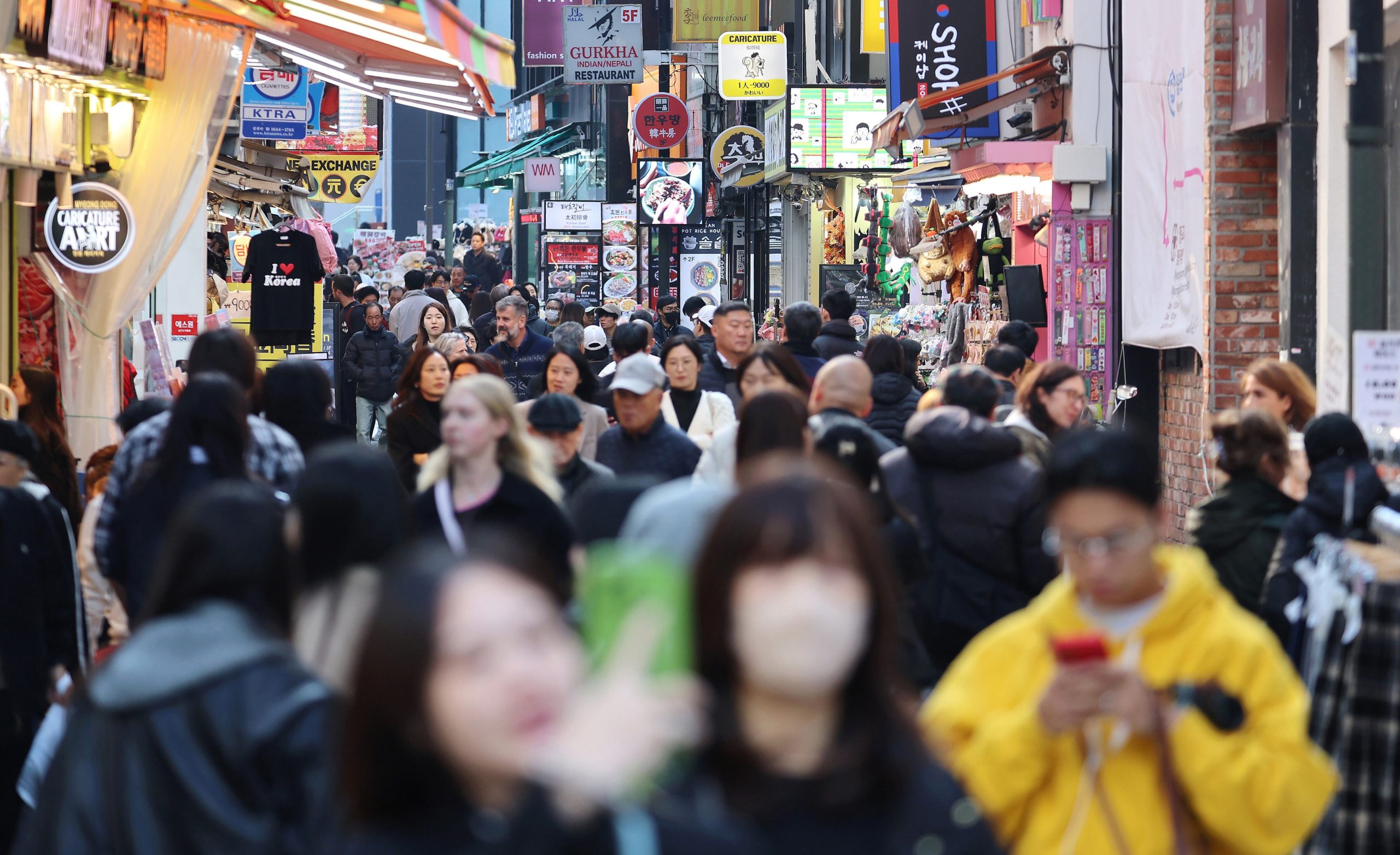
South Korea is experiencing a surge in foreign tourist numbers, setting new records and boosting several key industries. The Ministry of Justice’s Immigration and Foreign Policy Headquarters Statistical Monthly Report revealed that from January to September this year, 6,491,846 foreigners entered the country on tourist (B-2) visas. This marks a 17.6% increase compared to the same period last year, which saw 5,519,648 visitors.
The peak of foreign tourist numbers was recorded in 2019 at 7.15 million, but this dropped sharply due to the COVID-19 pandemic. However, by 2023, the number had recovered to pre-pandemic levels with 5.12 million visitors. Last year, the figure reached a record high of 7,546,000, and if current trends continue, this year could surpass that.
The first nine months of this year already account for 86% of last year’s total, indicating that the trend is likely to continue. This increase in foreign tourists has had a positive impact on South Korea’s distribution and tourism sectors.
Retail Sector Benefits from Increased Tourism
Lotte Shopping reported preliminary third-quarter earnings showing a 0.7% year-on-year increase in domestic department store sales to 734.3 billion Korean won. Operating profit rose 9% to 79.6 billion won, attributed to strong fashion sales and sustained visits by foreign customers. The main branch of Lotte Department Store in Jung-gu, Seoul, saw a 39% surge in foreign sales, with their proportion rising to 19%.
Shinsegae Department Store also released its third-quarter results, recording sales of 622.7 billion won, a slight increase despite high renovation costs. Operating profit fell only 4.9% to 84 billion won. A spokesperson stated that the decline in operating profit is narrowing each quarter, indicating improving profitability. The investments are gradually showing results.
Hyundai Department Store announced on the 5th that sales increased 1.5% year-on-year to 576.8 billion won, with operating profit jumping 25.8% to 89.3 billion won. A representative explained that the growth momentum in the department store sector has strengthened due to the K-content boom and visa-free entry for Chinese tourists. Sales of key categories like fashion, luxury goods, and high-end jewelry have improved alongside government stimulus measures such as consumption coupons, leading to significant increases in both sales and operating profit.
Hotel and Casino Industries Thrive
The hotel and casino industries are also reporting strong performance, driven by visa-free group tours for Chinese visitors and a general rise in foreign tourists.
Lotte Tourism Development achieved record-high sales of 186.6 billion won and operating profit of 52.9 billion won in the third quarter, up 34.2% and 138.9% year-on-year, respectively. Its operating margin surged from 8.3% last year to 28.4% in the third quarter this year.
Notably, the casino division’s sales for the first three quarters reached 333.9 billion won, already exceeding last year’s annual total of 294.3 billion won. The hotel division (Grand Hyatt Jeju) also recorded its highest-ever sales of 46.1 billion won, with an average room occupancy rate of 90.2% in the third quarter—nearly full capacity.
Paradise Company and Grand Korea Leisure (GKL), both operating casinos, are estimated to have seen their third-quarter operating profits rise 42.5% and 186% year-on-year to 51.6 billion won and 16.6 billion won, respectively.
Outlook for the Fourth Quarter
A distribution industry official remarked, “Since this year’s Chuseok holiday falls in October, part of the holiday season’s performance will be reflected in the fourth quarter. Combined with the year-end season, we expect further improvement in fourth-quarter results.”
Leave a Reply
You must be logged in to post a comment.