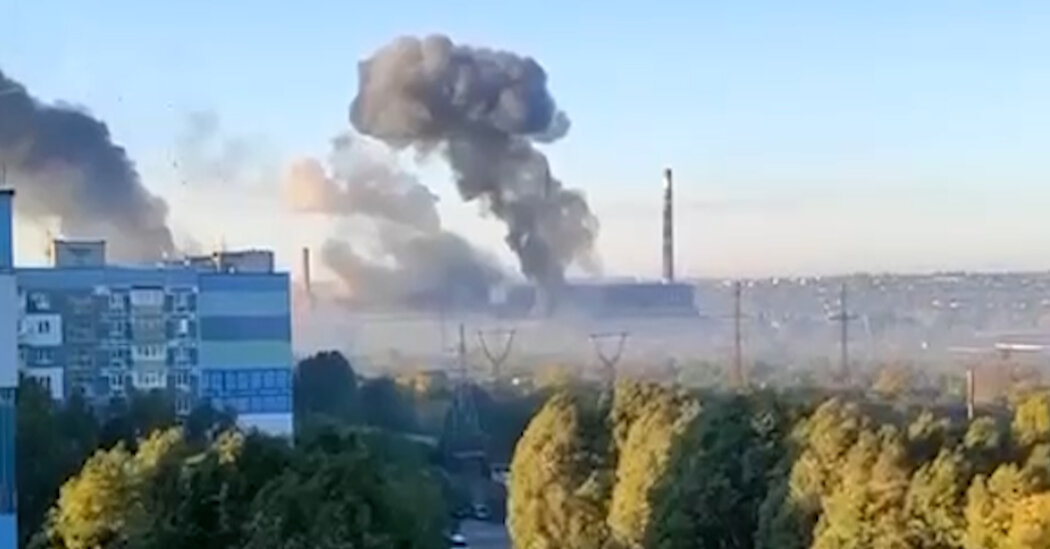
Major Russian Attack on Ukraine’s Energy Infrastructure
A significant Russian attack on Ukraine’s energy infrastructure has led to widespread power outages in several regions. The strikes have caused emergency power cuts, with authorities reporting the situation as critical. Ukraine’s Energy Minister Svitlana Grynchuk confirmed the attacks, stating that “the enemy is massively attacking Ukraine’s energy infrastructure again.” While specific regions affected were not disclosed, the impact has been felt across multiple areas of the country.
Despite the ongoing challenges, Grynchuk expressed confidence that Ukraine will maintain light and heat throughout the winter. This assurance comes amid growing concerns over the potential for heating outages as winter approaches, especially given the recent escalation in attacks on energy facilities.
Zelenskyy Warns of Russian Efforts to Seize Pokrovsk
Ukrainian President Volodymyr Zelenskyy has warned that Russia is making every effort to seize Pokrovsk, a key city in the eastern Donetsk region. According to Zelenskyy, Ukrainian intelligence estimates that approximately 314 Russian troops are currently inside the city, an increase from previous reports of up to 200 at the end of October. He also mentioned that Russia has launched around 220 assaults near Pokrovsk in the last three days.
Zelenskyy emphasized the importance of Pokrovsk to Russian military strategy, suggesting that capturing the city would be a significant step toward achieving Moscow’s goal of occupying the entire Donbas region. However, he noted that despite heavy fighting, Russian forces have made no progress in nearby cities such as Siversk, Kramatorsk, or Kostyantynivka.
Trump Exempts Hungary from Sanctions on Russian Energy Imports
In a separate development, U.S. President Donald Trump exempted Hungary from sanctions on the import of Russian oil and gas. Hungarian Prime Minister Viktor Orban met with Trump at the White House, where he requested the exemption. Orban stated that Hungary faces a different situation compared to other European countries, emphasizing the necessity of accessing Russian energy supplies.
This move has raised questions about the implications for European energy policy and the broader geopolitical landscape. The exemption highlights the complex relationships between Eastern European nations and their reliance on Russian energy resources.
Russia’s Hybrid Warfare Network in Europe
A recent study has shed light on Russia’s network of agents involved in hybrid warfare operations across Europe. The research highlights how Moscow has developed a strategic approach to sabotage and influence in European countries, positioning these activities as a central pillar of its overall strategy.
The study suggests that these hybrid operations are not merely side efforts but are integral to Russia’s broader goals in the region. It calls for the EU to take proactive measures to counter these tactics and protect its member states from further destabilization.
Impact of Continued Attacks on Energy Infrastructure
Over the past few months, Russia has intensified its attacks on Ukraine’s energy infrastructure, targeting natural gas sites that supply most of the nation’s heating fuel. These attacks have left many Ukrainians vulnerable as the winter season approaches, with experts warning of potential heating outages if the situation continues.
The ongoing conflict has not only disrupted daily life but has also placed immense pressure on Ukraine’s energy sector. Despite these challenges, the government remains committed to ensuring that citizens have access to essential services during the colder months.
Ongoing Conflict and International Reactions
As the war in Ukraine continues, international reactions remain divided. While some countries support Ukraine’s efforts to defend its territory, others, like Hungary, seek alternative arrangements to manage their energy needs. The situation underscores the complexity of the conflict and the far-reaching consequences it has on both regional and global scales.
The latest developments highlight the urgent need for coordinated international efforts to address the humanitarian and security challenges posed by the ongoing war. As the situation evolves, the world watches closely to see how these events will shape the future of the region.
Leave a Reply
You must be logged in to post a comment.