Strategic Shifts in the Western Sahara Conflict
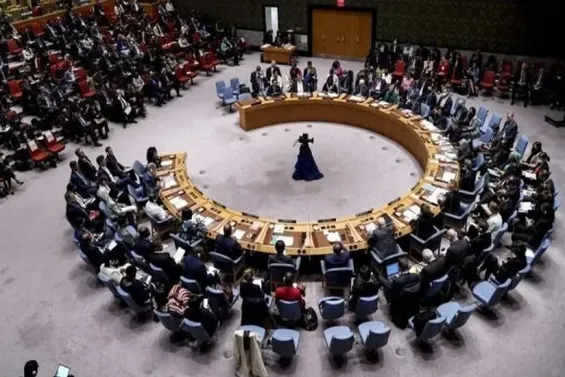
The Elcano Royal Institute, a prominent think tank based in Spain, has released a comprehensive report analyzing the current state of the Western Sahara conflict. The report highlights a significant shift in power dynamics, suggesting that “all the cards are now in Morocco’s hands” following recent developments at the United Nations Security Council.
This assessment comes as the conflict reaches its 50th anniversary, marking five decades of tension and unresolved disputes over the territory’s future. The institute, which is honorarily chaired by King Felipe VI and supported by various Spanish ministries and institutions, emphasizes that Resolution 2797 represents a pivotal moment in the history of the conflict. It essentially marks the end of the peace process initiated in 1991 with a proposed referendum on self-determination.
Military Dominance and Control
Morocco has consolidated its control over most of the Western Sahara region, maintaining authority over approximately 80% of the area’s 266,000 square kilometers since 1991. This military dominance, backed by support from the United States, has allowed Morocco to control what is known as the “useful Sahara.” The country has successfully thwarted multiple attempts by the Polisario Front to alter the balance of power, particularly after the liberation of the Guerguerat crossing in November 2020.
The report underscores that the Polisario Front, which seeks independence for the Sahrawi people, has been left in a vulnerable position. Its inability to address the growing frustrations of the local population has further weakened its standing in the region.
Political and Diplomatic Advancements
On the political and diplomatic front, Morocco is described as “steadily advancing.” The report notes major investment efforts in the region, which have bolstered Morocco’s influence. In contrast, the Polisario leadership remains economically weak and politically marginalized, struggling to gain traction among the Sahrawi population.
The alignment of several key international players, including the United States, France, Spain, the United Kingdom, and Germany, with Morocco’s sovereignty stance has also played a crucial role. This alignment has become more pronounced since former U.S. President Donald Trump recognized Western Sahara as Moroccan territory in December 2020.
A Changing International Landscape
The report highlights the diminishing support for the self-proclaimed “Sahrawi Arab Democratic Republic,” which is now recognized by only 47 countries, down from 84 previously. Morocco has not only prevented the 1991 referendum but has also imposed a new framework centered on autonomy as the most realistic path to resolving the conflict.
In 2000, former UN Secretary-General Kofi Annan acknowledged that the process of identifying eligible Sahrawi voters and implementing the settlement plan had reached a deadlock since the end of 1995. This historical context underscores the challenges faced by the international community in finding a resolution to the conflict.
Algeria’s Evolving Stance
Algeria’s absence from the recent Security Council vote reflects its growing fatigue with defending a cause that no longer yields benefits. The report notes that Russia, China, and Pakistan abstained from the vote, signaling their indifference to the fate of the Sahrawi people.
While Resolution 2797 does not explicitly rule out self-determination, the institute concludes that holding a genuine referendum, which was already nearly impossible, has now become closer to a miracle. This suggests that the path to a peaceful resolution of the conflict may be increasingly difficult to navigate.
Conclusion
The Elcano Royal Institute’s report paints a clear picture of the shifting dynamics in the Western Sahara conflict. With Morocco gaining strategic advantages and international support, the future of the region remains uncertain. As the conflict continues to evolve, the need for a comprehensive and sustainable solution becomes more pressing than ever.
Leave a Reply
You must be logged in to post a comment.