Blog

  • Forget utensils: science reveals mind-blowing truths about eating with your hands

    The Role of Touch in Taste Perception

    Have you ever noticed that certain foods seem to taste better when you eat them with your hands? A pastry, a slice of pizza or even a coxinha – it seems to taste different when you feel direct contact with the food. But is it just an impression, or is there a real explanation for this? Researchers and ancient traditions guarantee that eating with your hands can change the way your brain perceives taste.

    Touch Also Tastes

    We often think that taste is only on the tongue, but eating involves all the senses – and touch is one of them. When we touch food, the brain starts processing information long before the first bite: temperature, texture, humidity, crunchiness. All this activates areas related to pleasure and anticipation.

    A study in the Journal of Retailing and Consumer Services showed that people who touch food before eating feel the taste more intensely and have a more pleasurable experience. The simple physical contact awakens a sense of “ownership” and involvement with what will be consumed. It’s as if the brain understands: “this is mine, and I want to enjoy every bit of it”.

    Eating with Your Hands Is Ancient

    Long before forks and knives were invented, eating with your hands was the norm. People from India, Africa, the Middle East and Southeast Asia still maintain this custom – and not for lack of cutlery, but out of tradition and philosophy.

    In Indian culture, for example, it is believed that the five fingers represent the five elements of nature (earth, water, fire, air and ether). Eating with your hands is therefore an act of connection between the body, the food and the universe. The idea is that by touching the food, you become more aware of what you are ingesting, which helps with digestion and quantity control.

    Fork and Knife: The Elegance of Distance

    But the knife and fork also play a role. The introduction of cutlery in Europe, between the 16th and 17th centuries, came with the advancement of etiquette and hygiene standards. Eating with your hands began to be seen as a “rustic” gesture, and utensils gained a status of sophistication and control.

    In a way, cutlery creates a distance between you and the food. This distance can diminish the emotional and sensory involvement with the food – after all, touch is mediated by metal, and the brain doesn’t feel texture directly. On the other hand, cutlery allows for more precise cuts, helps with presentation and, of course, is indispensable in formal contexts.

    The Brain Prefers Natural

    Neuroscience research shows that the pleasure of eating is linked to sensory expectation. When you see, smell and touch food, the brain releases dopamine – the pleasure hormone – even before chewing. Eating with your hands enhances this sequence, making the moment more engaging and satisfying.

    In addition, there is evidence that people who eat with their hands eat less. This is because the process is slower and more conscious: you have to pick it up, feel it and put it in your mouth, which increases the perception of satiety. In other words, as well as being more pleasurable, it can be a habit that helps control eating habits.

    When the Context Changes the Taste

    The same dish can taste different depending on how and where it is eaten. A hamburger eaten with your hands in the car tastes different from the same hamburger cut with a knife and fork in a restaurant. This is because the context influences how the brain interprets the experience.

    Eating with your hands is usually linked to informal, emotional and even nostalgic moments – parties, picnics, quick snacks. Cutlery, on the other hand, evokes situations of control, etiquette and convention. That’s why the same food can seem “livelier” in one context and “more neutral” in another.

    The Balance Lies in the Middle Ground

    There’s no need to abandon cutlery, but it might be worth revisiting the way we eat. At home, with simple, familiar food, using our hands can make the moment more pleasurable and conscious. In formal situations, the fork and knife play the role of practicality and elegance.

    After all, eating is more than just nourishing the body – it’s a sensory, emotional and even spiritual experience. And each way of eating tells a story: that of culture, tradition and the relationship each person has with food.

    To Feel Is to Taste

    At the end of the day, eating with your hands is a way of reconnecting your body to food. It’s letting the sense of touch participate in the meal and the pleasure begins before the first bite. Science confirms it, and ancient cultures already knew it: taste isn’t just on the tongue – it’s in the whole experience.


  • Roh Soh-yeong Shares Child’s Art as Divorce Ends

    Roh Soh-yeong Shares Child’s Art as Divorce Ends

    A Journey of Reflection and Closure

    Roh Soh-yeong, the director of the Art Center Nabi, has shared a deeply personal reflection on the finalization of her divorce from SK Group Chairman Chey Tae-won. In a post on her Instagram, she detailed the emotional process of packing up her belongings from the home she once entered as a bride 37 years ago.

    She wrote, “Packing up. With the divorce finalized, I am leaving the house I came to as a bride 37 years ago.” The message was accompanied by photos of items filled with memories, including a wedding dress and hanbok believed to be from her 1988 wedding. These images also featured clothing, bags, and personal belongings that had been part of her life for decades.

    Roh reflected on the years she spent living with her parents-in-law and the challenges of raising her two daughters alone before sending them off to marriage. Now, she is also parting ways with her son, marking the end of an era in her life.

    Among the items she shared were a drawing paper gifted by her children, which included paper-made tuxedos and dresses pasted over photos of Chairman Chey and herself. The paper was adorned with multiple message cards, each filled with heartfelt messages. Roh described the significance of these objects, stating, “After turning 60, everything feels precious. Every piece of clothing, bag, and shoe holds laughter, tears, effort, frustration, and hope. I fold each one carefully.”

    She continued, “Above all, I feel grateful. The warmth of a shawl, the coverage of an overcoat, the comfort of a scarf—all evoke the labor of those who made them and brought them to me. I fold each one carefully.”

    One particular item that stirred deep emotions for Roh was a drawing paper where her three children, with their small hands, cut out photos of their mother and father, pasted them, and filled it with messages saying “Happy Forever!!” She expressed her sorrow over the innocence of her children’s wishes, asking, “Where can the innocent hearts, who desperately wished for their parents to love and be happy, find solace?” She added, “I folded this, too, with care.”

    Legal Proceedings and Family Legacy

    Earlier, on the 16th, the Supreme Court vacated and remanded the appellate court’s decision regarding the property division ratio in the divorce lawsuit between Chairman Chey and Director Roh. While the lower court acknowledged that former President Roh Tae-woo provided approximately 30 billion won in financial support to Chairman Chey’s father, Choi Jong-hyun, it ruled that this could not be considered as Director Roh’s contribution to the property division. However, it separately confirmed the consolation money and the divorce itself.

    The Supreme Court’s First Division (Presiding Justice Seo Kyung-hwan) stated in its ruling, “Even if, as acknowledged by the lower court, former President Roh Tae-woo provided approximately 30 billion won to the plaintiff (Chairman Chey), the source of this money appears to be bribes he received during his presidency.”

    The court added, “Former President Roh Tae-woo’s act of using part of the bribes to support his in-laws or his children’s family, while concealing it to prevent the state from tracing and collecting the funds, violates good morals, social order, and exhibits pronounced anti-social, unethical, and immoral characteristics, placing it outside the protection of the law.”

    This legal development highlights the complex interplay between personal relationships and public accountability, particularly in cases involving high-profile individuals and their families. For Roh, the resolution of the legal matters marks a significant step toward closure, allowing her to focus on the emotional journey of letting go and moving forward.

  • Mburu Places Flowers at Sister’s Final Resting Place

    Mburu Places Flowers at Sister’s Final Resting Place

    A Heartfelt Tribute to a Lost Sister

    Renowned actress Wanjiku Mburu, best known for her role as Mama Baha in the popular show Machachari, recently opened up about the tragic passing of her sister, Gracie Wangui, who played the character of Mama Bob. Her heartfelt message and shared memories have deeply moved fans and fellow cast members alike.

    Wanjiku took to social media to share a series of photos from her childhood with Gracie, revealing that they were biological siblings. This information came as a surprise to many fans of the show, who had not previously known about their close relationship. The actress also posted behind-the-scenes shots of their acting experiences, giving a glimpse into their professional and personal bond.

    In a new video, Wanjiku was seen laying flowers on a road in Durban, South Africa, where her sister had last been before her untimely death. She shared details about the tragic incident, which occurred on October 28, when Gracie lost her life in a road accident. Wanjiku described the location as Moy River, emphasizing its significance in her memory.

    The video captured Wanjiku in denim shorts, a white sweater top, and white crocks, with a cold and misty environment surrounding her. In her caption, she wrote: “South Africa, Durban, and to be specific, Moy River. And this is where my sister has her last moments. And I am just here to lay this flower in remembrance of her. So in loving memory to Grace Wangui Mburu.” She also added, “28.10.2025. Gracie, you are dated forever.”

    Messages of Condolence from Fans

    The post quickly garnered attention, with many fans expressing their condolences and support. Some of the comments included:

    • @Jonnes said: “May Mama Bob’s soul rest in peace. Be strong, Mama Baha. Sincere condolences to your family.”
    • @King Martin said: “Rest in peace, Grace, you were a champion.”
    • @Bahati Zena said: “May my friend rest in eternal peace.”
    • @Gilberto said: “Let God comfort you, my dear sister.”
    • @Larry Dedan said: “I am sorry, may she rest in peace.”
    • @MaryLiz said: “Haki Mama Baha, you have been through a lot. I remember your brother was also abducted. Find peace.”
    • @Boke Wanjiru said: “My deepest condolences to you and the family.”
    • @Okinda said: “I am sorry for your loss. May the Almighty God comfort you.”
    • @Sherow said: “Poleni sana. May she rest in peace.”

    The Tragic Fate of Wanjiku’s Brother

    In addition to mourning her sister, Wanjiku also spoke about the loss of her brother, who had been abducted a decade ago. In 2024, she publicly appealed to President William Ruto for assistance in bringing her brother home. She shared an emotional account of how her brother had contacted her from Somalia, where he had been taken after the abduction. Wanjiku revealed that her brother and her cousin were together at the time of the incident.

    Her plea resonated with many, leading to an outpouring of online support. Netizens rallied to urge the president to consider helping the family reunite with their loved one. The tragedy of losing both a sibling and a brother has left Wanjiku in deep sorrow, but her strength and courage continue to inspire those around her.

  • China Emerges as Scientific Giant: Europe’s Response?

    China Emerges as Scientific Giant: Europe’s Response?

    China’s Ascendancy in Global Science

    “Scientia potestas est — Knowledge is power!” This phrase, coined by English philosopher Sir Francis Bacon at the end of the 16th century, underscores the strategic value of knowledge. Today, this motto remains relevant as the global research landscape undergoes a significant transformation.

    A recent study published in the “Proceedings of the National Academy of Sciences” (PNAS) reveals that Chinese scientists have taken the lead in nearly half of all collaborations with US colleagues in 2023. This milestone highlights Beijing’s growing influence and its ability to shape the research agenda on key international issues.

    China’s Leading Role: A Shift in Power

    China’s rise in scientific prominence is not measured solely by traditional metrics like Nobel Prizes or publication counts. An analysis of six million research papers shows that 45% of leadership positions in US-Chinese joint studies were held by Chinese researchers in 2023, up from 30% in 2010. If this trend continues, China is expected to achieve parity with the US in strategic areas such as artificial intelligence, semiconductor research, and materials science by 2027-2028.

    In terms of scientific publications, China has surpassed the US in several indices. The latest G20 Research and Innovation Report indicates that nearly 900,000 scientific publications originate from China, a threefold increase since 2015. In the Nature Index, which evaluates the top 150 medical and natural science periodicals, China has long overtaken the US. Among the ten leading institutions evaluated by the Nature Index, seven are Chinese.

    Strategy, Investment, and Networking: China’s Path to Success

    China’s rapid ascent in research is driven by significant investment and a strategic focus on science as a core component of its development plan. The country has opened its research to international collaboration and actively facilitates these partnerships. Chinese students and scientists are encouraged to work globally, fostering a network for increased international cooperation.

    Through technology industries and the Belt and Road Initiative (BRI), billions of dollars in investments are directed toward attracting talent to China and building global connections. According to the PNAS study, science diplomacy is used as a deliberate tool to enhance China’s position in the global research arena.

    Central Management vs. Creativity: Strengths and Weaknesses

    China’s strengths include speed, strategic investment, and centrally controlled networks. These factors contribute to outstanding results in engineering, electronics, materials science, physics, and chemistry. However, strict central control also presents challenges. In many research areas, China lacks groundbreaking innovations and the independence needed for creative breakthroughs.

    The US, with its decentralized and company-driven culture of innovation, still holds an advantage over China and Europe in certain fields. Additionally, international research collaboration is becoming more challenging due to geopolitical tensions between the US, Europe, and China.

    The AI Race: China Catches Up

    While the US currently leads in artificial intelligence (AI), China is rapidly catching up. The Deepseek language model exemplifies how quickly and affordably Chinese technologies can enter the market. Although Harvard remains a leader in AI innovation, Chinese academies are making significant strides.

    China dominates in AI patent applications, with the US maintaining a strong position but often lagging behind European institutions in global comparisons.

    Western Systems in Crisis: Why the US and EU Are Lagging

    China’s rise coincides with a period of weakness in the US and Europe. The US research landscape faces political instability, budget cuts, and a loss of top talent. Policies under former President Donald Trump and the strained relationship between the US and China have led to a decline in joint projects and a shift of talent toward China.

    Europe may benefit from top talent leaving the US, but it faces its own challenges. Many areas of science in Europe suffer from a backlog, and national sensitivities often hinder progress within the EU and across the continent.

    Global Fallout: Shifting Power Dynamics

    China’s dominance is reshaping the global economic and geopolitical order. As China organizes parts of the international research agenda, Europe risks falling further behind in the race for future technologies.

    Collaboration with Chinese teams could be a way for Europe to keep up. However, it remains uncertain how the Chinese system will respond to the increasing fragmentation of the scientific landscape and rising geopolitical tensions.

    Europe’s Opportunity: Embracing Diversity

    A potential alternative to fragmentation is a purposeful setup of a European force beyond national interests. Europe’s diversity in languages, cultures, and traditions is not a weakness but a strength. This diversity can drive innovation, something that monolithic countries may lack.

    The European Research Area (ERA) monitoring report suggests that if Europe cooperates effectively and pools its resources, it can become a scientific powerhouse capable of competing with China and the US on equal footing.

  • Rise Early, Transform Your Life: Science Says So!

    The Japanese Way to Start the Day

    To be in top form and hope to break longevity records, you should set your alarm for a specific time, like the Japanese do. Forget the grand principles of the miracle morning, which drags you out of bed at five o’clock sharp and leaves you feeling awful all day. Here’s how to reset your internal clock to discover the true meaning of happiness.

    A Setting on Your Alarm Clock to Extend Its Lifespan

    When you hear that jarring melody blaring from your bedside table, all you want to do is throw your phone out the window. You hit the snooze button to squeeze out a few more minutes of sleep. You drag yourself to work, missing your fluffy duvet and beloved mattress with every step. The Japanese, on the other hand, are in top form first thing in the morning, and it’s not because of their genes or their diet. While Disney princesses wake up to birdsong in fairy tales, in the Land of the Rising Sun, the inhabitants follow the rhythm of the sun and slip into their slippers as soon as day breaks.

    The Japanese, renowned for their serenity and innate calm, practice chronobiology. They don’t rely on (sometimes unreliable) technology to wake up, but on a more dependable indicator: the sun. They adapt to each change of cycle. Thus, in summer, they rise between five and six o’clock, while in winter, they leave the arms of Morpheus around seven. While you might set fifteen alarms in a row, even if it means being late, the Japanese abandon their sheets as soon as the sky clears.

    If you’re the type to linger in bed and struggle to open your eyes, these hours will certainly displease you. Yet, this is the Japanese secret to youthful vitality. As reported in a study published in Chronobiology International, living in rhythm with the sun improves sleep quality, boosts endorphin production, and increases life expectancy. There you have it: the true miracle morning—a gentle awakening, dictated by the sun.

    A Secret Borrowed from Japan, the Land of Centenarians

    Why copy the Japanese method? Quite simply because the country boasts over 95,000 centenarians. In short, Japan has the longest life expectancy in the world. This argument alone should be enough to convince you to change your morning routine. It must be said that, alongside their morning ritual, the Japanese maintain an impeccable lifestyle. They eat mindfully, fully listening to their bodies and satiety signals. They remain active well into old age, using public transportation and walking regularly. But above all, they take care of their minds and master the art of letting go better than anyone else.

    This slow and zen-like philosophy also manifests itself upon waking. Unlike the self-proclaimed “clean girls” of the internet who demand you complete your entire to-do list before heading to work, the Japanese don’t rush through tasks. They don’t chase after time; they appreciate it.

    This is also what the Japanese do when they get up to converse.

    In the morning, the Japanese don’t rush to the coffee machine; they do breathing exercises, stretching, and awaken their bodies with yoga postures. While most people barely take the time to eat a slice of bread, the Japanese, the very embodiment of wisdom, warm up mentally and physically for the day ahead.

    Morning Rituals and Diet

    As for breakfast, the menu might not appeal to those with a sweet tooth. The Japanese typically eat rice, grilled fish, miso soup, pickled vegetables, and green tea. This provides them with energy without weighing them down.

    The saying “the early bird catches the worm” has never been truer. However, the idea isn’t to add any extra pressure. Getting up early shouldn’t be an obligation, but an intention. And a lie-in never hurt anyone.

    Benefits of the Japanese Morning Routine

    There are several benefits to adopting the Japanese approach to mornings:

    • Improved sleep quality: By aligning with the natural light cycle, individuals can experience deeper and more restful sleep.
    • Increased endorphin production: Waking up naturally can lead to a boost in mood and energy levels throughout the day.
    • Enhanced life expectancy: Studies suggest that following a consistent sleep schedule can contribute to a longer lifespan.
    • Better mental health: The Japanese emphasis on mindfulness and relaxation can reduce stress and promote overall well-being.

    By incorporating elements of the Japanese morning routine into your own life, you can improve your physical and mental health, leading to a more fulfilling and balanced lifestyle.

  • Why Science Hails the Single Life

    Why Science Hails the Single Life

    The Benefits of Choosing a Single Life

    From the movies we watch and the music we listen to, to our friends and family, there is so much pressure from society to find “the one,” settle down, and start a family. But while this is the general formula of life for so many people, it’s not a universal blueprint. In fact, science has found several benefits of choosing to be single.

    Relationships and marriage are still very much the status quo across essentially all cultures. It’s to the point where if you’re not shacked up by the time you’re in your 30s or 40s, people start to wonder what’s wrong with you. However, singledom should not be seen as a defect; it should be embraced. Being fully happy and fulfilled by yourself is extremely empowering and, in many cases, is a more balanced way to live.

    Stronger Social Connections

    Anyone who’s been in a relationship or has had someone close to them start dating someone knows how relationships tend to cause friendships to fall off. People in relationships devote almost all their time and energy to their partner, and essentially forget about their friends, even though friends are arguably a more stable base. Serial daters may not realize that they feel lonely after breakups, not because they’re single, but because they have no friends. Single people, on the other hand, devote more time and energy to their friends and family, making those connections stronger and more numerous. This gives them a more diverse and resilient support system.

    What’s more, several studies have drawn a link between friendships and greater well-being, longevity, and happiness.

    Better Health

    There’s a reason your single friends are always the hottest: studies say single people tend to be fitter. When people find their person and “settle down,” they also tend to let themselves go to some degree. According to surveys, single people tend to exercise more often than those who are married. A 2015 study also found that single people tend to have lower BMIs and weigh less on average. Single people have more time and different priorities, so they skip the gym less.

    In addition to the physical benefits of singledom, it’s also been tied to better mental health and emotional well-being. Relationships are a lot of work, and they can be a source of chronic stress. Being single can provide emotional stability.

    More Independence

    Being single translates to a lot more freedom. You can travel all you want, move to a different country, and jump on job opportunities that require you to relocate. Studies have found solitude to be linked to greater creativity and productivity. When you’re single, you make a lot more spontaneous decisions that can positively impact your life, you grow independently, and develop different skills. You’re also more likely to be self-sufficient and be content with solitude, which is super important for leading a healthy, happy life.

    What’s more, being single has been tied to greater financial independence. Data by Debt.org shows that 21% of single people have credit card debt, which is six percent lower than married people, and (unsurprisingly) about 15 percent lower than married people with children. Despite the cost of living hitting single people harder, the fact that they’re essentially only spending money on themselves allows them to have greater control over their finances. They also have more time to put into their career and side hustles, increasing their earning potential.

  • Daegu Science Museum Hits 8 Million Visitors

    Daegu National Science Museum, a prominent science exhibition and education institution in the Daegu region, has achieved a significant milestone by welcoming over 8 million visitors. This achievement marks 12 years since its opening in 2013, making it the first industrial science and technology museum in South Korea.

    The museum recently announced that it surpassed 8 million cumulative visitors on the last day of the previous month. Following the achievement of 7 million visitors in October of the previous year, the museum has attracted a number of visitors equivalent to four times the population of Dalseong-gun, where the museum is located, within just one year.

    The 8 millionth visitor was Jang Hyun-seok, a 40-year-old resident of the Buk-gu district of Daegu, along with his family. As a token of celebration, the museum gifted the family a one-year free admission pass, a congratulatory flower bouquet, and a Lego model of the Apollo spacecraft’s lunar exploration vehicle for Jang’s son. Jang expressed his gratitude, stating, “I visited the museum to provide my child with science-related experiences, and it became an unexpected memory for our family. I will continue to visit Daegu National Science Museum with family and friends and promote it widely.”

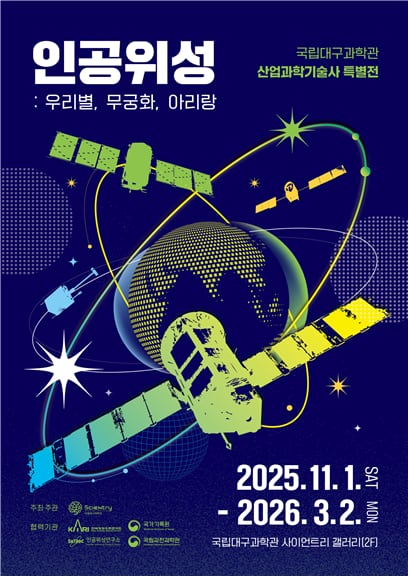
    In honor of the autumn season, the museum is organizing various events, including special exhibitions and astronomical observations. The “Artificial Satellites: Our Star, Mugunghwa, Arirang” special exhibition is currently taking place at the Sciencetree Gallery in front of the permanent exhibition hall 2. This exhibition showcases the science and technology behind satellites launched in the 1990s. Visitors can also view oral interviews with senior scientists who were involved in these projects and explore related scientific materials.

    Additionally, the “Daegu Root Industry” exhibition, hosted by Kyungchang Industry—a local company and one of South Korea’s top 100 automotive parts manufacturers—is ongoing. It highlights the evolution of automotive parts from the internal combustion engine era to those used in modern electric vehicles. The “Invisible Universe” space special exhibition, which started in August of this year, has been extended until March 2 of next year due to high visitor engagement.

    On the 5th at 6 p.m., the “Super Moon Returns” program will allow visitors to observe and photograph the super moon in front of the planetarium and enjoy a traditional fire-play activity using LED spacecraft. A super moon occurs when the Moon appears larger due to its closer proximity to Earth. This particular super moon is reported to be the closest to Earth since 2019 and the largest full moon of the year.

    The permanent exhibition hall 1 features the “Natural Science Phenomena Zone,” where visitors can experience scientific principles found in nature. The Dream Tree Science Education Center offers hands-on education programs utilizing artificial intelligence (AI), robots, and other technologies.

    Director Lee Nan-hee of Daegu National Science Museum expressed her appreciation, stating, “Thanks to the consistent love and interest from local residents and visitors, we have achieved the milestone of 8 million visitors. We will continue to expand science culture in daily life through diverse programs reflecting the latest scientific technologies.”

  • Bosses Banned from Rejecting Employee Leave Requests

    Bosses Banned from Rejecting Employee Leave Requests

    New Laws to Protect Parents of Stillborns

    New legislation has been introduced to ensure that parents who experience the tragic loss of a stillborn child or an infant death are granted the same rights and dignity as other parents. This change aims to prevent employers from canceling paid parental leave in such circumstances, offering much-needed support during one of the most difficult times in a parent’s life.

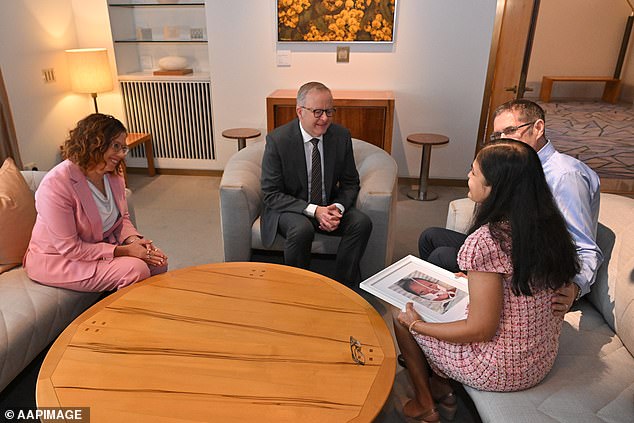
    The story of Priya, a six-week-old baby who passed away, highlights the importance of these changes. Her mother, who wishes to remain anonymous, shared her heartbreak after her employer canceled three months of pre-approved paid parental leave just five days after her daughter’s death. Meanwhile, her husband was allowed to take his full leave entitlement. This injustice prompted the couple to launch a campaign for change, which gained over 32,000 signatures on a petition in honor of their daughter.

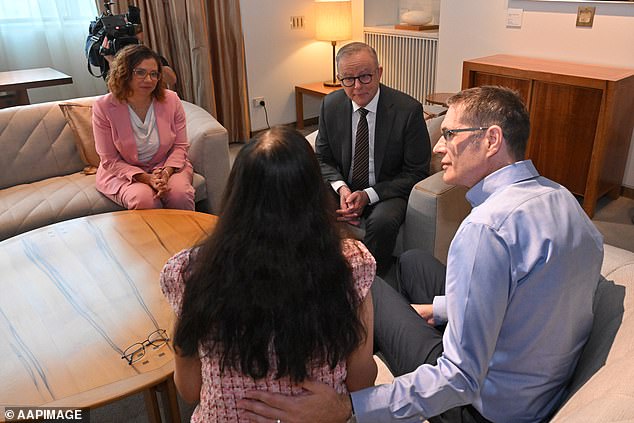
    Priya’s parents joined Workplace Minister Amanda Rishworth at Parliament House in Canberra to mark the passage of amendments to the Fair Work Act. These changes ensure that workplaces cannot cancel paid parental leave if employees have experienced a stillbirth or infant loss.

    A Symbol of Love and Dignity

    Priya’s mother expressed her deep emotions during the event, saying, “Priya’s bill is about love, compassion, dignity and respect.” She added, “It is a symbol of my love for my daughter, Priya, in moments when I was made to feel like my daughter’s life didn’t matter.”

    She emphasized that the bill honors not only her daughter but also every baby who has passed away and those who will in the future. “Baby Priya’s Bill honours my daughter, and it also honours every baby who has passed, and sadly, every baby who will pass in Australia,” she said, her voice trembling with emotion.

    Government Support and Challenges

    Workplace Minister Amanda Rishworth praised the changes, stating that they aim to give parents the rights they deserve while bringing attention to the sensitive issue of stillbirth and early infant death. “We need to have compassion in our community and in our society,” she said.

    However, not all voices were in agreement. A small group within the coalition argued that the bill should exclude parents who experienced late-term pregnancy terminations. In the upper house, Liberal Senator Alex Antic, Nationals Senator Matt Canavan, and Pauline Hanson’s One Nation attempted to limit entitlements where late-term terminations applied. Despite their efforts, the proposal was unsuccessful.

    Reactions to the Debate

    Priya’s father, Chris, criticized the debate surrounding late-term abortion in the context of the changes, calling it “politics of hate.” He stated, “It was hurtful to my wife, it’s disrespectful to our daughter.” He emphasized the need for more hope and human decency in the Australian parliament.

    Ms. Rishworth expressed disappointment that some senators tried to frame the bill as something it is not. “The bill is about giving parents the dignity in the event of a stillbirth or early death of a child,” she said.

    Statistics and Impact

    According to data from the Australian Institute of Health and Welfare, six babies are stillborn every day, and two die within 28 days of birth in Australia. These new laws represent a significant step forward in supporting families who face such heartbreaking losses.


  • 4 in 10 South Korean Scientists Pursue Global Careers

    4 in 10 South Korean Scientists Pursue Global Careers

    Rising Trend of South Korean Science and Engineering Professionals Seeking Overseas Opportunities

    A recent survey conducted by the Bank of Korea has highlighted a growing trend among South Korean science and engineering professionals, particularly those with master’s and doctoral degrees. The findings reveal that 40% of these individuals are considering leaving the country for overseas opportunities, driven by various factors including financial considerations.

    The data shows that the number of Korean science and engineering doctoral professionals working in the U.S. reached 18,000 in 2021, marking a doubling over an 11-year period. This trend underscores a significant shift in career aspirations among highly educated professionals in South Korea.

    Salary Disparities Between Domestic and Overseas Professionals

    One of the key findings from the survey is the stark difference in salaries between domestic and overseas professionals. After 10 years of obtaining their final degree, the average annual salary of domestic science and engineering professionals was approximately 97.4 million Korean won. In contrast, those who moved overseas earned around 386 million Korean won, which is four times higher.

    This gap is attributed to the fact that overseas salaries tend to rise sharply in the early stages of a career, while domestic salaries increase gradually over time. Additionally, the performance of overseas companies is significantly larger, contributing to the disparity.

    Comparing this to national income figures, South Korea’s per capita national income last year was $36,745, which is only 44% of the U.S. per capita income of $83,660. This economic context further emphasizes the financial incentives driving professionals to seek employment abroad.

    Younger Professionals More Likely to Seek Overseas Employment

    The survey also revealed that younger professionals are more inclined to consider overseas employment. According to the Bank of Korea’s issue note titledDeterminants of Overseas Outflow of Science and Engineering Professionals and Policy Response Directions, 42.9% of science and engineering master’s and doctoral professionals remaining in the country indicated they are considering overseas employment within the next three years.

    Notably, 5.9% have already made plans to move abroad or are currently in interviews. These results are based on a survey of 2,700 science and engineering master’s and doctoral professionals both domestically and abroad.

    By field, the highest consideration for changing jobs was found in biotechnology, pharmaceuticals, and medical devices (48.7%), followed by IT, software, and telecommunications (44.9%). Even in sectors where South Korea holds a competitive edge, such as shipbuilding, plant, and energy (43.5%), the rate of considering job changes exceeded 40%.

    Age Group Analysis

    When analyzing the data by age group, the inclination to seek overseas employment was strongest among those in their 20s (72.4%), followed by those in their 30s (61.1%) and 40s (44.3%). The proportion of professionals actively making plans was highest among those in their 30s (10.4%).

    The primary reason for considering overseas employment was financial factors (66.7%, combined responses from 1st to 3rd rank). This was followed by research ecosystem and networks (61.1%), guaranteed opportunities (48.8%), and children’s education (33.4%).

    Significant Salary Gaps During Early Career Stages

    The salary gap between domestic and overseas science and engineering professionals widens significantly during the first decade of their careers. According to the survey, in the year they obtained their final degree, the average annual salary of domestic professionals was approximately 58 million Korean won, while those who moved overseas earned an average of US$113,800 (approximately 163 million Korean won).

    This disparity is largely due to the significantly larger scale of overseas companies, even if the ratio of labor costs to sales revenue does not differ much from U.S. companies.

    Subsequently, the salaries of science and engineering professionals who moved overseas rose sharply, reaching US$269,800 (approximately 386 million Korean won) 10 years after obtaining their final degree. Domestic professionals with the same level of experience earned approximately 97.4 million Korean won, a quarter of their overseas counterparts.

    Long-Term Salary Trends

    Domestic science and engineering professionals needed 14 years after obtaining their degree to see their average annual salary exceed 100 million Korean won. The highest average salary was recorded 20 years after degree attainment, at 118.86 million Korean won.

    In contrast, science and engineering professionals who moved overseas peaked in average annual salary 13 years after obtaining their degree, earning US$366,400 (approximately 524 million Korean won). This then declined, with those 20 years post-degree earning an average of US$198,300 (approximately 284 million Korean won) annually.

    A source from the Bank of Korea stated, “While the average annual salary of domestic science and engineering professionals rises gradually with years of service, overseas professionals’ salaries increase sharply in the early stages of their careers and then lose correlation with tenure.” They added, “To prevent the overseas outflow of science and engineering talent, it is crucial to adopt a performance-based and flexible wage and compensation system.”

  • How Hurricanes Get Their Names: The Science of the Storm

    Understanding the Naming Process of Hurricanes

    Hurricanes, also known as tropical cyclones, are powerful storms that form over warm ocean waters and can cause significant damage. When you hear about the name of a new hurricane on the news, you might think it’s completely random. However, there is a lot more to the naming process than meets the eye.

    The Importance of Hurricane Names

    Naming hurricanes might seem like a trivial task, but it plays a crucial role in communication, preparedness, and response efforts. According to Matt Sitkowski, PhD, a meteorologist and science editor-in-chief for The Weather Channel, “Naming hurricanes is incredibly useful, especially in the age of social media and the hashtag.” This practice makes it easier to find information and helps with recall.

    How Hurricanes Are Named

    As CBS explains, a cyclone is assigned a name when it reaches tropical storm strength, which is defined by sustained winds of at least 39 mph (62.7 km/h). Once the winds reach 74 mph (119 km/h), the storm is classified as a hurricane. According to the Encyclopedia Britannica, the World Meteorological Organization (WMO) is responsible for assigning names to tropical cyclones. This practice began in the early 1950s to improve communication during storm events. Before this, storms were identified by their geographic location or by arbitrary numbers, which could often lead to confusion. By giving each storm a unique name, the WMO aimed to make it easier for the public, media, and emergency services to track and respond to these events.

    The Evolution of Hurricane Naming

    Currently, hurricanes are named alternating between male and female names. Encyclopedia Britannica notes that this system began for Pacific storms in 1978 and Atlantic storms in 1979. If you’ve ever noticed that some of the storm names seem somewhat repetitive, you aren’t wrong. In the Atlantic region, the WMO recycles its list of storm names every six years, meaning that the list of storm names used in 2004, for example, is used again in 2010. However, with the most damaging and notorious storms, the names are not reused. For example, Britannica notes that Hurricane Katrina in 2005 led to the name Katrina being permanently retired from the storm name list, and it was then replaced with a new name.

    The System Behind the Names

    Another curious fact is that according to the WMO, the lists of male and female names are alternated for naming the storms in alphabetical order. For example, the first storm of the year might be named “Alex,” the second “Beryl,” and so on. This system continues until all names on the list are used, after which the list starts over. Even though the WMO oversees the naming process, regional meteorological organizations may have input into the names used. For example, in the Indian Ocean region, countries like India and Bangladesh contribute to the naming of cyclones. This collaborative approach ensures that names are culturally appropriate and resonate with the local populations.

    The Significance of Hurricane Naming

    Naming hurricanes is essential and not just some wacky tradition, so much so that it has become a vital part of how the world both manages and responds to these powerful natural events.